Why natural materials in British bedmaking?
How British makers brought wool, cotton and horsehair together.
A tradition of making beds
In the early twentieth century, one strand of British bedmaking paired individually pocketed springs with natural fillings. Vispring went on to use wool, cotton and horsehair. The model Savoir made for London’s Savoy hotel in 1905 is another example of the craft tradition.
A role for every material
Pocket springs provide support that responds to pressure. Wool and cotton above them shape the feel of the surface. Some designs use curled horsehair as an airy, resilient filling. The order and thickness of the layers influence how these materials feel together.
What handwork contributes
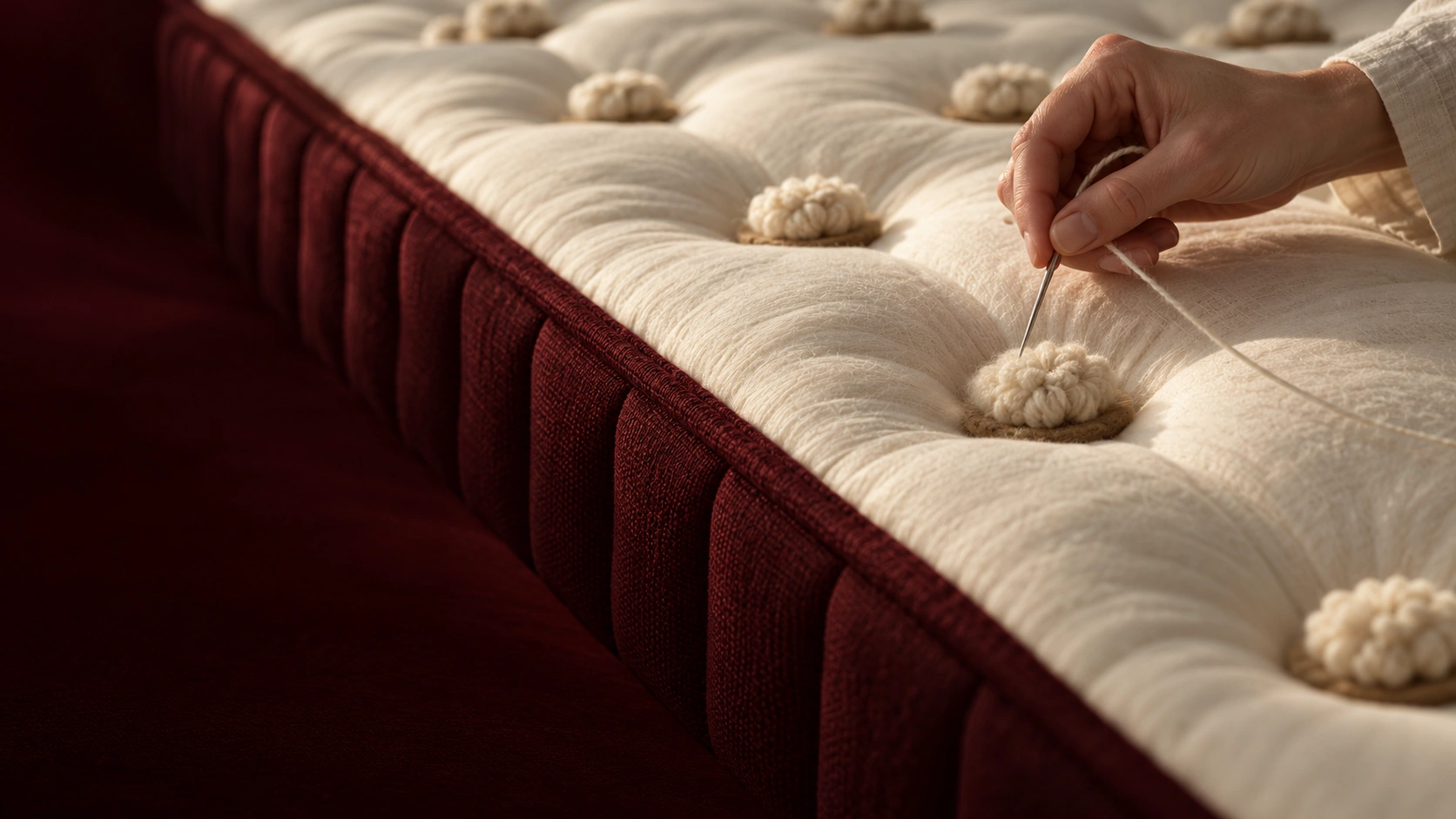
In traditional tufting, ties pass through the mattress layers and are secured at the surface to help keep the fillings in place. Natural materials remain part of this tradition because each has a job and the maker can combine them to suit the construction.